1. Introduction
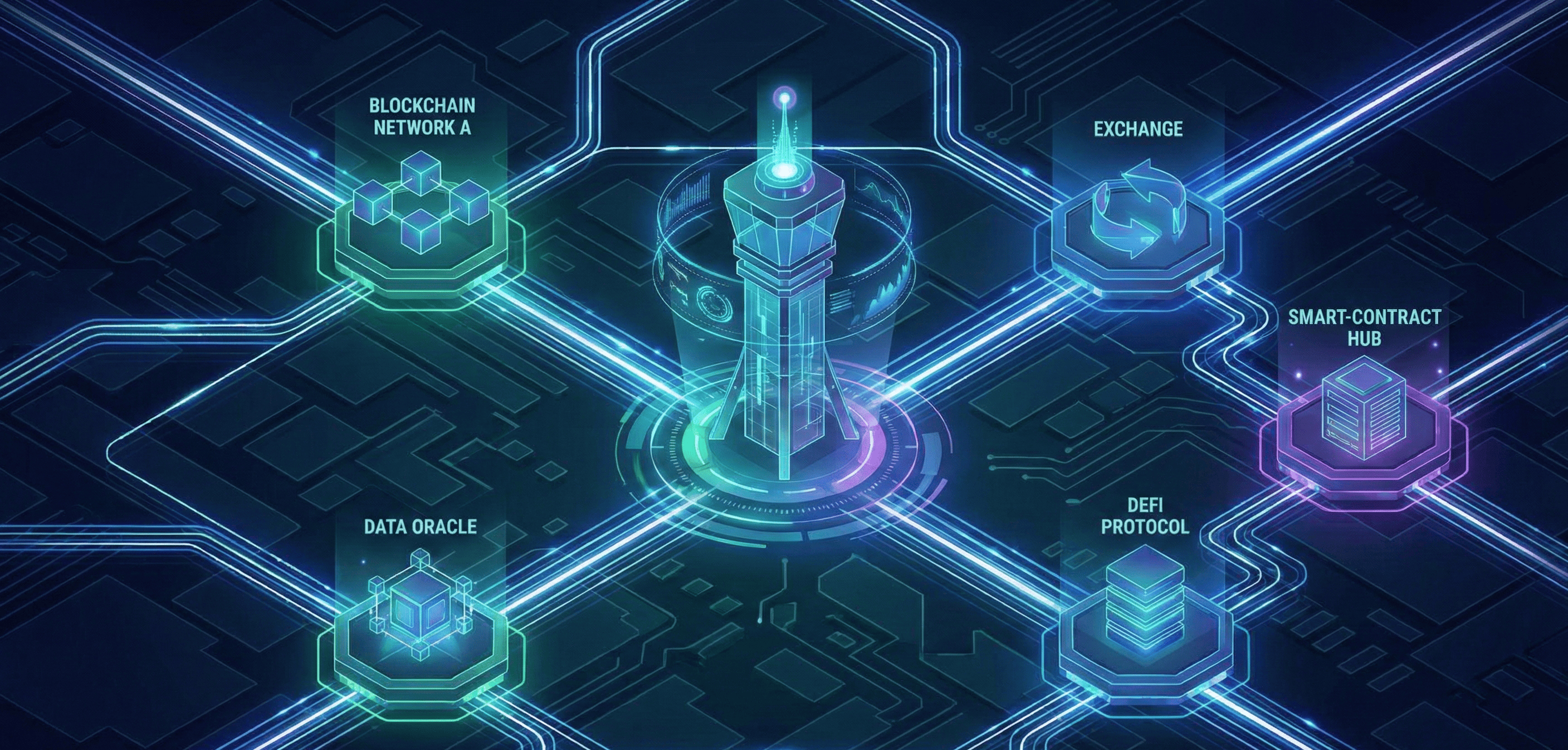
Once issued, stablecoins and tokens move through an interconnected ecosystem of exchanges, protocols, custodians, and cross-chain networks—creating circulation patterns that extend well beyond an issuer’s direct line of sight but increasingly matter for understanding the broader operating environment of the asset. As these markets grow more liquid and more complex, issuers and protocol teams are finding that visibility into how their tokens circulate is becoming a strategic necessity. It enables them to understand where exposure is forming, how liquidity is moving, and when activity begins to cluster around behaviours that may require attention.
Regulatory signals such as the GENIUS Act point toward a future where issuers are expected to maintain clearer situational awareness and demonstrate the technical capability to respond to high-risk activity when needed. At the same time, institutional partners—banks, payment providers, custodians, and market operators—are increasingly integrating tokens into higher-value flows and demanding greater transparency in return. As adoption accelerates, the industry is converging on a new model of oversight: ecosystem-level monitoring, a framework that allows issuers to track how their tokens move through the broader environment and support stronger integrity, compliance readiness, and operational trust across markets.
In this article, we outline why ecosystem-level visibility is becoming essential for issuers and propose a practical framework for monitoring token behaviour across markets.
2. The Core Problem: Fragmented Visibility in a Multi-Chain Environment
The challenge facing token and stablecoin issuers today is not that they lack data—it’s that the relevant data is fragmented across many disconnected environments. Tokens move through centralised exchanges, automated market-makers, liquidity pools, bridge contracts, OTC desks, and cross-chain routers. Each environment sees its own portion of the activity, yet no single venue holds the end-to-end picture. For issuers, this creates blind spots in three critical areas.
First, issuers often lack a clear view of where their tokens circulate once they leave controlled environments. Tokens disperse quickly across exchanges, custodial rails, DeFi pools, and multiple chains. Without a connected view, issuers struggle to answer basic but high-impact questions:
- Where is liquidity currently concentrated?
- Which chains are accumulating exposure fastest?
- Where are new, unfamiliar venues emerging as material touchpoints?
Sudden shifts such as large inflows into a new chain, rapid liquidity formation in fresh pools, or growing dependence on previously irrelevant venues are often detected only after they begin influencing price, stability, or partner integrations. The core limitation is spatial: issuers cannot reliably see where their token actually lives at any given moment.
Second, even when issuers can see where tokens are flowing, interpreting why they move that way requires behavioural context. DeFi composability means the significance of a transaction is rarely visible in a single step. A transfer that looks routine can, when linked to subsequent transactions, reveal a more complex sequence.
For example, liquidity added to a new pool might appear ordinary until it is followed by rapid routing through a high-risk intermediary and a bridge known for limited oversight. It is the sequence, not the individual hops, that signals a behavioural pattern. The challenge here is interpretive: understanding what multi-step activity means when compared against normal circulation patterns.
Third, institutional partners now depend on the issuer’s view of circulation. Banks, payment networks, and custodians increasingly ask issuers: Where is your liquidity currently concentrated? Which counterparties represent the largest exposure clusters? How much of your circulating supply has interacted with high-risk entities?.
In practice, this leaves issuers operating with partial signals in a fully connected market. They may see transactions, counterparties, or venues in isolation, but not the circulation dynamics that link them. That disconnect is what allows small shifts in liquidity, behavior, or control to scale quietly into broader exposure before they are recognized as risk.
3. Where Visibility Gaps Turn Into Real Risks
After issuance, tokens and stablecoins move through a dense web of exchanges, custodians, automated market-makers, cross-chain routers, and governance systems. This ecosystem creates a dynamic environment in which early-stage weaknesses—in contract controls, distribution decisions, or liquidity placement—can propagate rapidly across markets. Traditional monitoring frameworks, which focus on single-venue alerts, cannot capture these interconnected dynamics. Effective oversight requires a panoramic view of how tokens originate, disperse, and behave across chains and counterparties.
i. Issuance Integrity and Contract Control
The lifecycle of risk begins at the contract layer. A token’s smart contract defines minting rules, administrative privileges, and redemption logic; if this foundation is weak, all later circulation inherits that instability. Proxy patterns allow contracts to be upgraded without changing their visible address, making privilege changes difficult to detect with transaction-only analytics. Hidden owner-only functions—pause, mint, blacklist—remain invisible until exercised. A further complication is the gap between the legal issuer named in disclosures and the entity that controls upgrade keys, creating ambiguity over who possesses real on-chain authority.
For example, in the aBNBc incident, a compromised deployer key was used to upgrade the contract and strip out minting controls. The sudden wave of newly created tokens appeared on-chain as ordinary liquidity rather than an exploit, and by the time the pattern was visible, the supply shock had already propagated through multiple pools. A similar dynamic occurred in Ordinals Finance, where a proxy-admin change quietly shifted asset ownership without producing any abnormal transaction signals.
ii. Distribution and Counterparty Risk
After creation, a token’s risk profile is shaped by where initial supply goes and how early liquidity forms. For regulated stablecoin issuers, distribution typically occurs through KYC-verified institutions, reducing primary-market exposure. The risk emerges downstream: once tokens leave controlled rails, they move through DeFi pools, OTC channels, and multiple chains. The Harmony exploit illustrates this dynamic: stolen assets were converted into USDT, bridged across networks, and ultimately re-entered compliant venues. Each step looked benign locally; the risk became visible only when the entire sequence was connected across chains.
For unregulated or permissionless launches, the exposure occurs at inception. Without counterparty checks, early liquidity often comes from anonymous or previously sanctioned wallets. In the Squid Game token collapse, initial liquidity originated from addresses linked to earlier frauds, seeding taint into the asset from its first block of market activity. By the time the token reached exchanges, the contaminated baseline was already baked into its supply.
Across both settings, distribution risk manifests through recurring behavioural patterns: rug-pulls, wash trading, coordinated pumps, liquidity-pool laundering, Sybil airdrops, governance capture, and backdoor minting mechanisms. These behaviours rarely violate protocol rules; instead they exploit the structure of early liquidity and the anonymity of counterparties. Detecting them requires baselining early flows, monitoring initial liquidity recipients, and correlating behaviour across venues rather than relying on static address tags.
iii. Automation and Cross-Chain Obfuscation
Automation now makes laundering look like ordinary arbitrage. Market-making bots, routing engines, liquidation algorithms, and coordinated off-chain trading generate high-frequency flows that visually mirror legitimate liquidity activity, blurring the line between real market behavior and the disguised re-entry of illicit value.
In modern laundering flows, swaps, flash loans, lend–borrow loops, and routing engines collapse dozens of transfers into what looks like a single burst of normal trading. Bridge contracts then fracture assets into wrapped and synthetic forms with entirely new identifiers, while arbitrage bots split funds into small, market-sized increments. The result is speed plus disguise. In the Ronin and Bybit cases, stolen funds were layered across chains within minutes and returned to circulation as what appeared to be ordinary liquidity. The theft was obvious in hindsight. At the venue level, it was effectively invisible.
The Curve Finance exploit in July 2023 captures this dynamic cleanly. After vulnerabilities in Vyper-compiled pools were exploited, the attacker routed stolen funds through automated DEX paths at high frequency, splitting flows across pools and chains in rapid succession. On individual venues, the activity looked like routine arbitrage and liquidity rotation. There were no obvious red flags at the transaction level. The laundering pattern only became visible once movements were connected across contracts, pools, and networks, exposing a coordinated attempt to reintroduce illicit value under the cover of normal market making.
4. Custodial and Market-Structure Fragility
Even when issuance and distribution are sound, custodial behaviour and market structure can introduce systemic vulnerabilities. Large custodians and exchanges often hold a significant share of circulating supply. Their decisions—redeeming, withholding, reallocating reserves—can shift liquidity across venues and chains. Sudden redemption spikes, fragmented liquidity, or unexplained movements into unverified pools signal developing stress that may precede de-pegs or liquidity shortages.
On-chain indicators such as custodial concentration, abnormal issuance/redemption patterns, price–volume divergence, circular trading, and rapid liquidity migration are early warnings of structural imbalance. These patterns rarely trigger protocol-level exceptions but are critical for supervisory awareness.
Toward Ecosystem-Level Oversight
Across issuance, distribution, composability, custodial flows, and market conduct, one theme recurs: fragmentation of visibility. Each venue sees part of the picture, but no single vantage point captures circulation end-to-end. Ecosystem-level oversight addresses this gap by linking contract events, cross-chain activity, liquidity patterns, behavioural anomalies, and institutional touchpoints into a unified view. It does not require issuers to police downstream users, but it does enable them to understand where their assets circulate, how risk propagates, and when emerging behaviour warrants attention.
Merkle Science operationalizes ecosystem-level oversight as a full-lifecycle monitoring model that spans pre-issuance controls, live circulation, structural exposure analysis, and investigation. Instead of treating risk as something that appears only after tokens are in the market, the framework starts at the point of access, validating counterparties, distributors, and contract authorities before minting or liquidity is enabled. This establishes a clean baseline so that downstream anomalies are measurable against intentional design choices, not hidden from the start.
Once tokens circulate, the focus shifts to continuous behavioral visibility. Real-time monitoring captures how the asset is actually being used across wallets, exchanges, and chains, surfacing interactions with sanctioned entities, structured routing behavior, and early signs of laundering or misuse. This moment-to-moment awareness is paired with macro-level analytics that show how supply, liquidity, and exposure evolve over time across venues and networks, allowing issuers to see concentration risk, illicit exposure trends, and structural stress before they surface as market events.
When behavior escalates beyond anomalies into credible risk, the same circulation data becomes the foundation for investigation. Cross-chain tracing connects wallets, contracts, bridges, and exploit infrastructure into defensible transaction narratives that can support regulatory reporting and partner engagement. Together, these layers convert fragmented signals into a continuous operating view of risk across the full token lifecycle from issuance to enforcement.

 Compass
 Tracker
 KYBB
KYBB Institute